ASTOR RECORDS
|
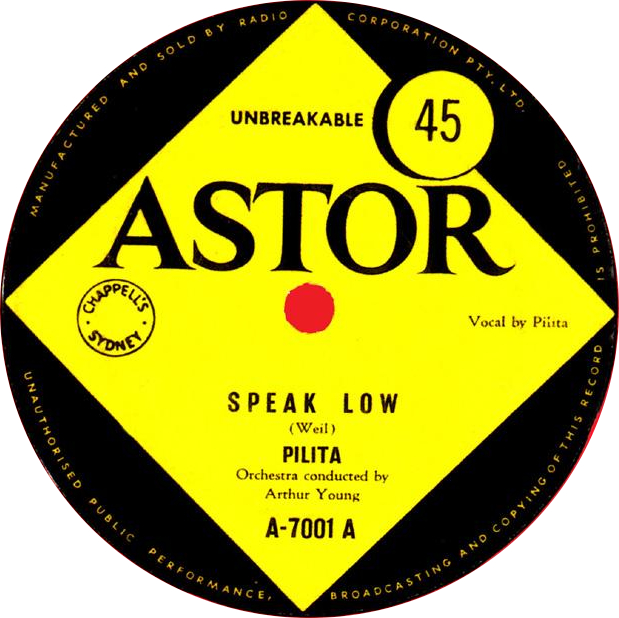
Astor's original label design,
used throughout the 1960s
|
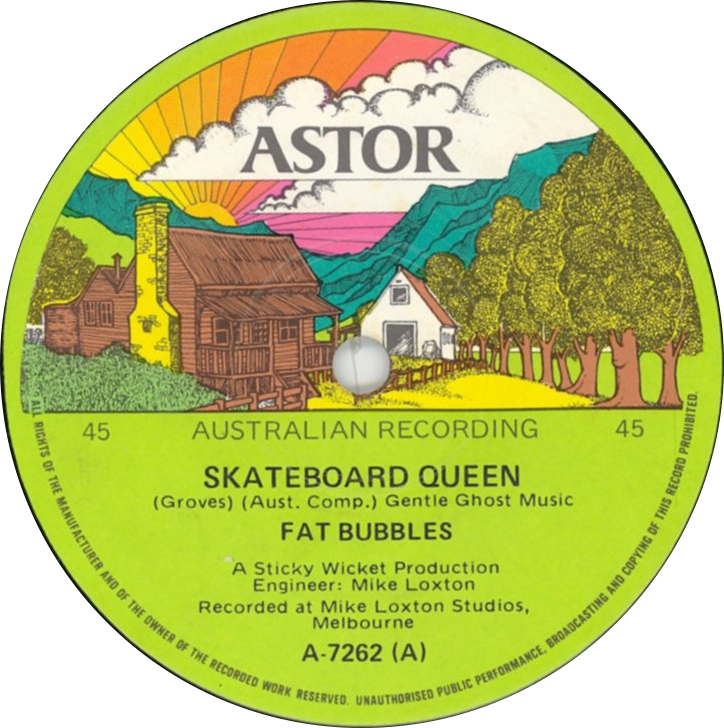
Astor's pictorial
label
design, introduced around 1970 |
|
Category: Australian-owned
independent label
Location: Melbourne, Vic.
Date: 1950s-1980s
Owner/s: Radio Corporation P/L (Vic.)
/ Electronic Industries / Phillips (1970s)
House labels: Astor
Distributor for: Autumn (UK,
1960s), Blue Cat (UK,
1960s),
Buddah (USA, 1960s-70s), Charger (USA, 1960s), Colpix (USA,
1960s),
Crusader (USA 1960s), Dawn, (UK, 1960s), Elektra (USA, 1960s),
Go!! (Aust. 1960s),
HBR (USA,
1960s), Image (Aust.
1970s),
Kama Sutra (USA 1960s), Mercury
(USA, 1960s), MCA (USA
1960s-70s),
MGM/Verve (USA, until 1967), MTA(USA, 1960s), Much (Canada,
1960s),
Parkway (USA, 1960s), Picadilly (UK, 1960s), Pure Soul
Music (USA, 1960s),
Pye (UK, 1960s-70s) Scope!!
(Aust., 1960s), Sweet Plum (Canada, 1960s),
Vanguard (USA, 1960s),
Young Blood (UK, 1960s).
|
History
Astor Records was the recording
division of manufacturing
group The Radio Corporation of Australia. This company
was later
bought out by Electronic Industries, which in turn was absorbed into
the multinational Philips conglomerate in the early
1970s. Radio
Corporation produced consumer electronic goods under the
Astor brand from the mid-1920s until the mid-1970s. It was one of a
number of prominent Australian
companies including Radiola, AWA
and
Kriesler that
produced a electronic and consumer goods, including radios, record players and
televisions.
Astor was one of the first electrical goods companies
established in
Victoria. From its original premises at 126-130 Grant
St, South Melbourne it became one of the state's most prominent
manufacturers.
Although Astor products were sold all over Australia, the Sydney-based
Kriesler and AWA brands originally dominated the market outside
Victoria, but during the 1950s the company was chosen to
supply radios for GMH's Melbourne-made Holden
cars, and as a result Astor became a nationally known
brand; their 'Diamond Dot' and 'Airchief' car radios are
well-known to Holden owners and aficionados.
Astor's parent company The Radio Corporation was founded in
1923 as Clark &
Hagblom, a company making fixed condensers and radios for the Louis
Cohen
Wireless company, which Clark & Hagblom took
over later the same year. In 1926 the company
merged with two other small firms to create
The
Radio Corporation, which quickly became a major player in
the Australasian domestic radio industry with its Astor
brand. The firm had close links with US companies such as
Hazeltine
and
Jansen; it was a technologically innovative company that
actively
promoted its expertise. It was prolific in terms of the models it
produced and unlike its more conservative rival AWA, Astor made a huge
range of
colourful radios with unique designs and innovations, such as magnified
dial lenses and state specific dials, and they pioneered the small
portable radio set in Australia. Surviving Astor valve radios are now
highly collectible and keenly sought after by overseas collectors.
Astor produced a wide range of
domestic whitegoods, and made the natural progression into the design
and
manufacture of black and white TV receivers after television
broadcasting was
introduced in Australia in 1956 and in
the 1960's. Among Astor's string of
technical and commercial successes,
there was a famous dispute over copyright with the Disney organisation.
Astor had appropriated the 'Micky Mouse' name, which appeared on many
of their early products, but after a challenge from Disney, Astor
simply dropped the 'Mouse' part rather than pay for the rights. Their
'Mickey' radios sold strongly for many years.
Radio Corporation was eventually taken over and became a
division of Electronic Industries, run by Sir Arthur Warner. EI
acquired several other well-known companies and brand names, including
General Accessories (which bought Malvern Star in 1958) and Eclipse
Radio, which owned the Peter Pan and Monarch brands. Other brands
established by Astor were its 'Anodeon' picture tubes, 'Anocap'
polyester capacitors and the 'Ferrocart' vibrator units used in its
accumulator-powered radios.
In the early 1970's, Electronic Industries was taken over by
the Netherlands-based multinational Philips, then headquartered at
Rhodes in Sydney. With the takeover, the Astor brand name disappeared
from the consumer electronics market, although Astor Records
continued in business until the early 1980s. Ironically, one of Astor's
very last single
releases -- Joe Dolce's "Shaddupa You Face" -- turned out to be one of
the
biggest-selling singles in the history of the Australian record
industry.
Astor's surviving Australian competitors were eventually wiped
out
by the effects of globalisation. The first and heavist blow
came in 1974 when the Whitlam Lbor government cut the
protective tariffs on imported electronic goods by 25%, and by
the mid-1970s the Australian market was being flooded with cheap,
high-quality TVs, radios and stereo systems from the USA, Japan, Taiwan
and Hong Kong. The tariff reduction and the resultant
increase in competition from
multi-national electronics corporations were exacerbated
by the lingering effects of the old trade protection system,
which had lulled some local companies into complacency and rendered
them relatively inefficient and unwilling to innovate. Many
well-established Australian companies folded, while others were simply
taken over by overseas interests, and Pye and
Kriesler were also both absorbed by Philips in the late Seventies. The
effects of the tariff reductions were exacerbated by the
Whitlam government's approval for the long-delayed introduction of FM
radio and colour television broadcasting; faced with the massive costs
of re-tooling to make the new colour TV and FM radio sets that woulod
have had to compete with proven high-quality products from their
overseas competitors, companies like Kriesler simply opted out
of the race after 1975 and by the end of the 1980s most local
electrical maufacturing companies had either been absorbed by
multinational companies like Philips of simply went out of business.
Astor Records
 Because
they already produced radios and TVs, it was logical
for
Radio Corporation to move into content production, so they established
their own recording division and distribution network, which
was
launched around 1960. The company's HQ
was
in Melbourne and the main pressing plant was located at Clayton, but it
established branch offices and/or distribution warehouses in
other
capital cities
including Sydney and Brisbane.
Because
they already produced radios and TVs, it was logical
for
Radio Corporation to move into content production, so they established
their own recording division and distribution network, which
was
launched around 1960. The company's HQ
was
in Melbourne and the main pressing plant was located at Clayton, but it
established branch offices and/or distribution warehouses in
other
capital cities
including Sydney and Brisbane.
Astor's inaugural releases were the single
"Speak Low" and the LP Pilita Tells The Story Of Love
by Pilita with Arthur Young & His Orchestra. Pilita Corrales
was a Filipina singer whose original notoriety in Australia came from
the fact that she was shipwrecked while en route to
Australia with a circus troupe in 1958 and had to be rescued by the
Australian Navy.
She became popular on Melbourne TV and was the first female
artist
to score a hit on the newly-established Top 40 chart, with the song
"Come
Closer to Me". She recorded at least three LPs for Astor while she was
living in
Australia. After returning to the Phillippines in the mid-1960s she
became a star of nightclubs and cabaret in
S.E. Asia, with over 135
albums to her credit and many
appearances in Asia and the USA. Now widely known as "Asia's Queen of
Songs", she still enjoys a reputation as a "singing icon and living
legend" in the Phillipines, promotes new talent, and in late 2003
completed a series of shows in Manila with her daughter, Jackie Lou
Blanco. To honour her pioneering role on Australian TV, Pilita
now
has a street named after her in an outer Melbourne suburb.
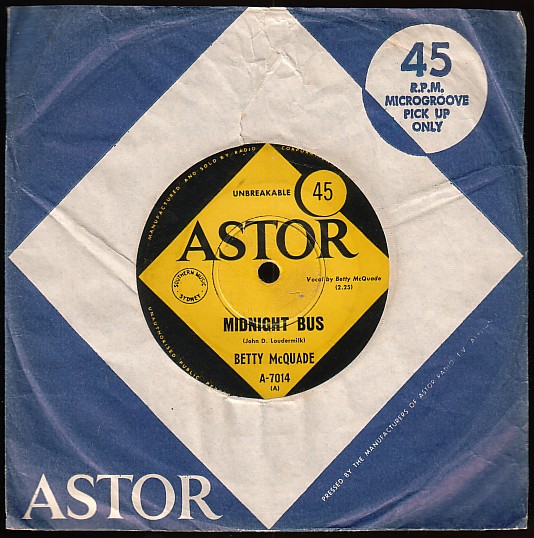
Other early local signings included singer Betty
McQuade whose "Midnight Bus" was an early hit for the
label, harmonica virtuoso Horrie Dargie (who later established
the Go!! label), Bobby
Cookson, The Hi-Fi's and The Marksmen. There seems to have
been a short hiatus in the company's local recording activities during
1965, which
may
have been due to Astor's takeover by the Electonics Industries
group. The company's discography indicates that there were no
locally-recorded singles issued in the
label's A-7000 series during this period, although licenced
overseas releases in its A-1000 series were apparently not affected.
Local recording resumed in 1966 with the single "Pearl Diver" / "The
Rip" by surf band The 4 Strangers (which later became Tamam Shud).
One of
Astor's most successful pop acts of the mid-1960s was The Masters Apprentices,
who
were signed in late 1965 on the recommendation of
singer Bobby Bright.
Astor
released the Masters' first six singles, including their classics
"Undecided", "Wars or Hands Of Time", "Living In A Child's Dream" and
"Elevator Driver", and their superb self-titled debut LP. All
the
Masters' single except "Undecided" (which was recorded in Adelaide)
were cut at Armstrong's Studios in Melbourne, and were
nominally produced by the late
Dick Heming,
Astor's A&R manager / house producer. Lead
singer Jim Keays states in his memoirs that the credit for most of
these
productions really belongs to engineer Roger
Savage, with some input (notably on "Living In A Child's
Dream") from Ian "Molly" Meldrum.
Other popular local acts Astor signed in the mid-Sixties
include
Peter Doyle, The 4 Strangers, The
Brigade, The City Stompers, The Colours, The
Gathering,
Grandma's Tonic and The Perfection. Ascot scored big hits The
Town Criers' "Everlasting
Love" (1968) and Ron Tudor discovery Matt Flinders who
scored a big hit with "Picking Up Pebbles" (#4, 1969).
Former W&G
house producer Ron
Tudor worked as a Promotions Manager at Astor for two years
from 1966-68.
A number of acts
who had previously recorded for W&G released singles on Astor
during Ron's tenure with the label, and it seems likely that Ron
brought these performers to Astor. Ron left Astor in 1968 to found his
own
independent production company, June Productions, and in
1969 he established
the Fable Records label, which was launched in April 1970. A
number of former Astor artists including The Paul McKay Sound, Matt
Flinders and The Strangers, recorded for Fable in the early 1970s.
 Astor
continued to sign local acts in the 1970s and early 1980s, inlcuding
Perth progressive rock band Bakery
-- their classic
second single "No Dying In The Dark" and their two albums Rock
Mass For Love and the superb Momento --
and Normie
Rowe signed with the label in 1975 and recorded several
singles
for them and ca. 1980 they signed the reformed lineup of The
Seekers with Lisa Wisselling and Buddy England.
Astor
continued to sign local acts in the 1970s and early 1980s, inlcuding
Perth progressive rock band Bakery
-- their classic
second single "No Dying In The Dark" and their two albums Rock
Mass For Love and the superb Momento --
and Normie
Rowe signed with the label in 1975 and recorded several
singles
for them and ca. 1980 they signed the reformed lineup of The
Seekers with Lisa Wisselling and Buddy England.
Astor was also an important distributor of local independent
labels. In the '60s it distributed Melbourne's Go!!
and Scope
labels, owned by DYT, the company co-founded by former Astor
recoridng artist Horrie Dargie, which
also produced the famous Go!! Show pop music TV
series. In the early 1970s, Astor distributed the Sweet Peach and Image labels.
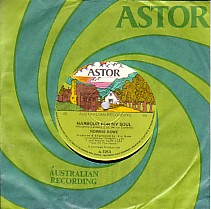
The original Astor yellow-and-black 'diamond' label design was
phased out sometime around 1970 and replaced with an eye-catching
full-colour design
featuring an idealised rural scene, but the familiar serif
font of the Astor brand name was retained. Locally-produced music was
prominently identified with the words "Australian Recording" just
beneath the logo.
Recordings licenced from overseas labels (see below)
were a
significant part of Astor's business, and as a
result Astor's locally-recorded releases are
not consecutively numbered.
Astor held the Australian distribution rights to a number of
important international labels including Elektra (USA), Pye (UK), MCA
(USA), MGM/Verve (USA) --
which included the rights to the Kama Sutra/Buddah labels -- and
Casablanca (USA) after 1974.
Astor was one of the original shareholders in The
Phonographic Performance Company of Australia Ltd. The PPCA,
incorporated in 1969, was established to administer broadcast and
public performance rights and licences for sound recordings and (later)
music videos for radio, television and public venues.
 In
the early '70s, following the unfortunate collapse of his own Air label, singer-songwriter Buddy England
(a latter-day member of
The Seekers) joined Astor as an Artists and
Repertoire
Manager; Around 1972 Bruce Woodley, Keith Potger and Athol Guy began
planning a new incarnation of the band. England was an old friend of the
group and became closely involved in the reformation, as he recalled for Milesago:
In
the early '70s, following the unfortunate collapse of his own Air label, singer-songwriter Buddy England
(a latter-day member of
The Seekers) joined Astor as an Artists and
Repertoire
Manager; Around 1972 Bruce Woodley, Keith Potger and Athol Guy began
planning a new incarnation of the band. England was an old friend of the
group and became closely involved in the reformation, as he recalled for Milesago:
"When they planned to reform
in 1972-73, I was asked by Athol to help find a suitable female vocalist
to replace Judith. After some time looking and listening I came across
Louisa Wisseling at a restaurant/club called The Swagman ... took Athol
to have a listen ... made Louisa an offer and there you are. I was also
asked to vet material for the group to record their return CD and also
to write the charts for the vocals as well as the charts for the
orchestrations. I signed them to the Astor label, then went to England
to work on the production with the rest of the guys. The album was a
success. Bruce left a year later and I joined the group. I stayed with
them until 1981. This was about the time the group folded ...again
until they reformed a few years later."
The "Mark II" Seekers jumped straight back into the
Australian charts with Woodley's "Sparrow Song", which went to #2 in June 1975, and
their reunion album The Seekers went Top 20, peaking at #17 in July. In September 1975 they undertook
a national tour and released three more singles: "Reunion"
(October), "Where in the World?" (April 1976) and "Giving and Taking"
(June '76). Woodley left in June 1977 to concentrate on
songwriting and production, at which point Buddy took over, remaining
with them until the groups split again. Athol quit in 1978, to be replaced by
another legendary veteran of the Melbourne '60s scene, Peter Robinson (ex The
Thunderbirds, The Strangers). This third version of The Seekers released two more
albums, All Over the World (Nov. 1978) and Giving And Taking (1979) and continued to perform in
Australia and overseas until the group's eventual dissolution in 1981.
Writer and satirist Brian
Dawe is also known to have worked for Astor as
a promotions/marketing manager around the same time
and, according to rock historian Ed Nimmervol, Brian was
instrumental in breaking Neil Diamond's Hot
August Night, which became a huge major success for Astor and MCA in Australia.
In
late 1974 Astor made a distribution deal with the American
Casablanca label and Australia became one of the first overseas
territories to which Casablanca's major rock act of the time, KISS,
were distributed, and the band was (and remains) very successful here.
Founded in 1973 by former Buddah
executive Neil Bogart, Casablanca Records enjoyed great
success with
KISS in the
mid-70s and then became one of the most successful labels of the disco
era -- thanks in no small measure to Countdown and Sounds -- with
Donna Summer, The Village People, Brooklyn Dreams, Cher, Love
& Kisses and Parliament/Funkadelic.
In 1976 Astor inadvertently earned a place in Oz punk
rock
history as the manufacturer of the first single by The Saints.
Guitarist Ed Kuepper was
working in Astor's Brisbane warehouse when the band decided to make
their first record. He approached the company to see if they could
press it for him, and was told that they could -- in fact, like EMI and
Festival, Astor offered a custom pressing service that was
often used by country
artists and pop-rock artists, as well as by individuals, or by other
private, corporate and commercial clients. With Mark Moffatt producing,
The Saints recorded their classic
debut single "I'm Stranded" / "No Time" on their own Fatal Records
label, which was custom pressed for them by Astor.
One of Astor's last single releases -- which, ironically,
was its most successful -- was Joe Dolce's "Shaddap You Face" which has held
the record for the most successful song in Australian music history for
more than 20 years.
 According
to collector Frank Driscoll, one of the rarest and most
valuable recordings ever pressed by Astor is the track "You Gotta Let
Go" by Marcia Hines. Originally thought to have been an album-only
track, it was in fact also pressed in very limited numbers as a 7"
single. Whilst the album from which it was taken went platinum in
Australia, less than 10 copies of the single are known to exist and
these are currently valued at over AU$700!
According
to collector Frank Driscoll, one of the rarest and most
valuable recordings ever pressed by Astor is the track "You Gotta Let
Go" by Marcia Hines. Originally thought to have been an album-only
track, it was in fact also pressed in very limited numbers as a 7"
single. Whilst the album from which it was taken went platinum in
Australia, less than 10 copies of the single are known to exist and
these are currently valued at over AU$700!
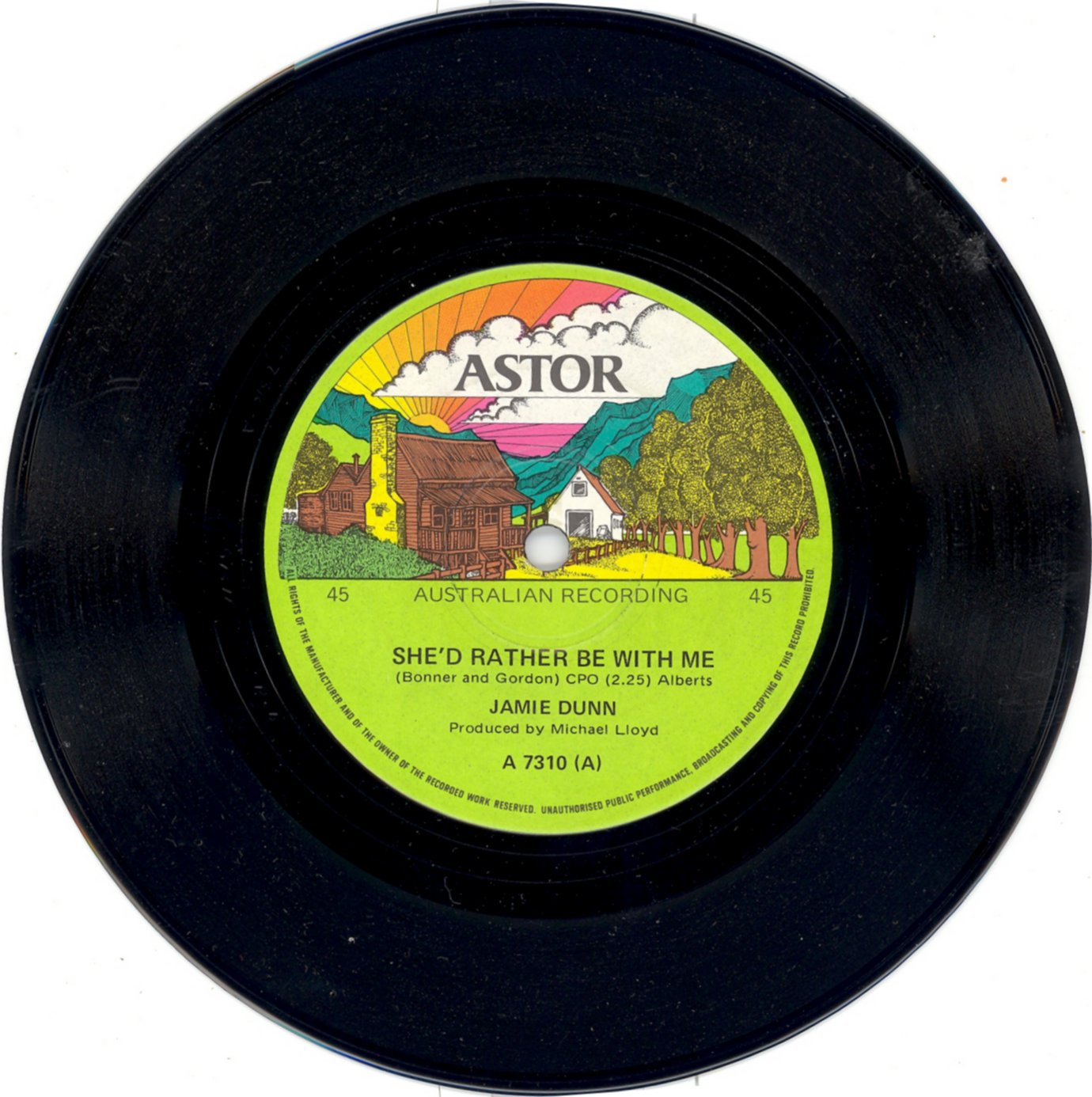
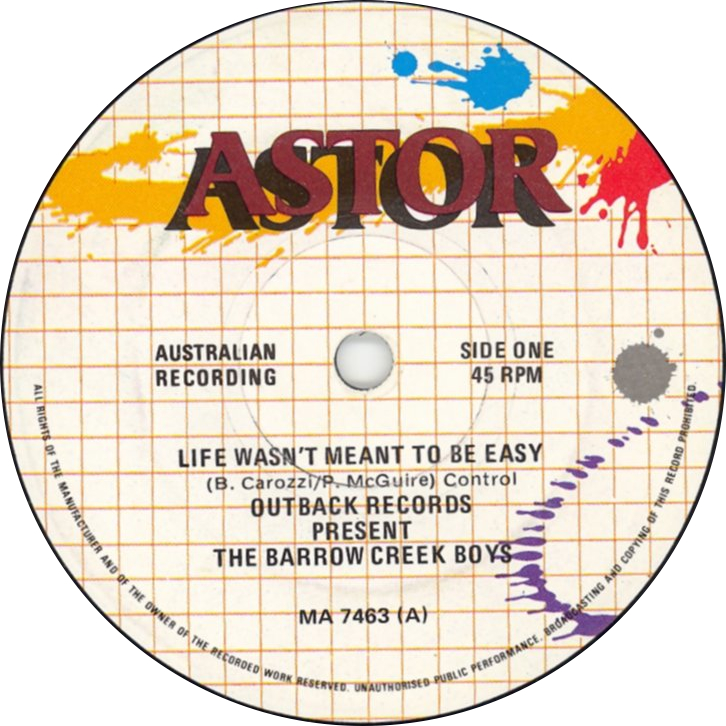
Right: Astor's
last single design, ca. 1980.
Overseas labels distributed by Astor
Like its Sydney rival Festival Records, the
distribution
of
recordings sourced from overseas labels was an important part of
Astor's business, and the company enjoyed considerable success with
records
licenced from American and British labels. The best known of these are
the British label Pye and the American labels Vanguard, Kama Sutra,
Buddah and
Elektra.
Pye
The British Pye label was, like Astor, the recording division
of an electrical goods manufacturer, Pye of Cambridge, who
established their own recording division in the 1950s. According to the
history of the company by Dario
Western, Pye established its own Australian subsidiary in the 1950s,
but this folded in the early '60s and the Australian distribution
rights were picked up by Astor. Pye recordings comprised the majority
of Astor's international catalogue; most of the Pye
singles were
issued under Astor's long-running 'AP-1000' series.
Pye's leading acts included Lonnie
Donegan, The Searchers, Max Bygraves, Donovan, Petula Clark, Sandie
Shaw, Jackie
Trent and Tony Hatch, The Kinks
(from 1964 until their move to RCA in 1971), the early
recordings by
Status
Quo
(including "Pictures of Matchstick Men") and UK-based Australian
jazzer Kenny Ball. Petula Clark was one
of Pye's most popular and successful artists and according to
a review from Go-Set
in 1967 she
was heavily promoted by Astor in Australia, scoring many
national hits. Other notable Sixties acts released through
Astor
included The Dixie Cups, The Honeycombs, The Beau Brummels and The Ivy
League.
Pye's subsidiary imprint Pye International held the British
rights to a number of important U.S. independent labels including
Vanguard, A&M, Colpix and King, and they released artists
including Herb Alpert, The Marcels, James Brown, Dionne Warwick and
Chris Montez in the U.K. It is probable that the Australian rights to
most of these
labels were included in Astor's deal with Pye; one
notable exception was the fledgling American label
A&M, which was picked up by Festival Records in the early
1960s.
Vanguard
The Vanguard
label was
established in 1950 by brothers Maynard
and Seymour Solomon in New York. It started as a classical label, but
is best known for its recordings by pivotal
folk and
blues artists of the 1950s and early 1960s, including Paul Robeson, The
Weavers, Joan Baez,
Buffy Saint-Marie, Ian and Sylvia, and Mimi and Richard
Fariña. Unlike its other licenced international recordings,
Astor issued many Vanguard singles in its 'A-7000 series',
which
was otherwise used for Australian recordings.
Pye set up a subsidiary label,
Dawn, which had some success in the early '70s with The Brotherhood Of
Man and Mungo Jerry, whose version of "In The
Summertime" competed with a rival version by Australia's The Mixtures,
released on Fable. Pye also
had links with the BBC, Satril, Fly, and Disco Demand labels but
their most successful affiliate label was DJM (Dick James Music), the
label to which Elton John was signed in the early '70s. Pye also had
success with their "Golden Hour" compilations (The Kinks, The Searchers
et al) and with their
budget imprint Marble Arch.
Elektra
Renowned US label Elektra was founded
by Jac Holzman in 1950.
From its origins as a small independent specialising in contemporary
American popular folk and "ethnic" field recordings (including
the
famed Nonesuch Explorer series), Elektra grew rapidly in the mid-1960s
with the assistance of A&R manager and house producer Paul
A. Rothchild, who helped Elektra to snag several
of
the hottest new 'West Coast' acts of the period including The
Doors, The Butterfield Blues Band, Judy Collins, Tim
Buckley,
Love and soft-rock superstars Bread. Astor
began distributing Elektra recordings around 1966, and all
these
titles were issued on its AP-1000 series. The earliest known Elektra
single released by Astor is Love's "Little Red Book" / "A Message to
Pretty" (1966) and among its releases is a single by the UK-based
folk-rock band Eclcetion, led by expatriate Australian folkie Trevor
Lucas, and the debut single by The Stooges. Astor
released 56
Elektra singles in Australia between 1966 and 1970, when the label was
purchased by the Warner Bros group for $10 million and
the rights were taken over by Warner's newly-established Australian subsidiary.
Kama Sutra / Buddah
The story of the Kama Sutra and Buddah
labels is a
fascinating chapter in rock history. Kama Sutra was originally founded
as an independent production company in 1964 by American entrepreneur
George Goldner. The Kama Sutra label was set up by
Goldner's associate Artie Ripp in 1965. It was distributed in
the
USA by MGM, which Astor distributed in the mid-60s, and
this is presumably how Astor originally gained the Australian rights to
Kama Sutra, which they retained even after they lost the MGM/Verve
rights to Philips/Phonogram
in 1967.
Kama Sutra's first big major success was The Loving Spoonful,
who scored a major hit in 1966 with "Do You Believe In Magic". In 1967
managing director Art Kass established a sister label, Buddah, to
produce acts that fell outside Kama Sutra's agreement with its
distributor, MGM. Kass appointed former MGM and Cameo-Parkway executive
Neil Bogart as MD
of the new label, and during 1968-69 Buddah acts including The
Lemon Pipers, Ohio
Express and 1910 Fruitgum Company -- studio bands created and produced
by the team of Jeff Katz and Jerry Kasenetz -- spearheaded the
so-called "bubblegum" craze that soon dominated the charts.
Buddah handled a very diverse range of artists, including many
soul and R&B performers. One of their first big R&B
successes was with The Five Stairsteps & Cubie, who had a
sizeable US hit with the original version of "Something's Missing (In
My Life)", a song that was covered very successfully in Australia by Marcia Hines in the
late 1970s. Other Buddah artists of the late 60s were soul singer
Timothy
Wilson, The Lemon Pipers ("Green Tambourine"), Captain
Beefheart & His Magic Band (Safe
As Milk), the Rhodes Scholars, Le Cirque, The Baskerville
Hounds and The Second Story.
In the early 70s Buddah signed Lou Christie and also released
records by a range of former '50s idols including Paul Anka, Johnny
Tillotson, James Darren, Freddy Cannon, Len Barry, Teddy Randazzo,
Trade Martin, Gene Vincent, Chubby Checker and Bill Haley. Another
notable Buddah recording from this period was the successful
gospel LP by the Edwin Hawkins Singers, who also featured prominently
on the classic single and LP Candles In The Rain by
labelmate Melanie Safka. Buddah had big success with 50s revivalists
Sha Na Na, released the debut
recordings by
The Flamin' Groovies and Charlie Daniels and signed new wave group NRBQ
and future
disco king Van McCoy.
Buddah also had distribution deals with influential
R&B labels Hot Wax/Invictus (The Honey Cone), Sussex (Bill
Withers) and Curtis Mayfield's Curtom label (Mayfield, The Staple
Singers, The Stairsteps). Some of these recordings were released in
Australia under licence on Astor and they include a number of
highly-regarded singles and EPs which are now of great interest to
'rare soul' aficionados. Astor's soul releases have been researched and
catalogued by collectors Frank Driscoll and Phil Fare and their
listings of soul singles released in Australia on Astor (and many other
Aussie labels) can be found on the excellent capitolsoulclub
website. Regrettably, few of these releases managed to make it onto
commercial radio playlists, due to the racist agenda that
pervaded
commercial pop radio programming in the Sixties and early Seventies.
In 1973, after Bogart and several other Buddah
execs left
to form the Casablanca
label, Art Kass made an offer Motown hitmakers Gladys
knight & The Pips, whose Motown contract had recently expired.
After signing with Buddah they scored one the biggest hits of the
decade with "Midnight Train To Georgia". The label
continued with varying success until the late 70s.
MCA
The American MCA label ... description ... The MCA deal also
briefly gave Astor access to the famous Impulse jazz label, which
MCA had acquired after it took over ABC Records in 1979.
Astor achieved what was
undoubtedly its biggest sales successes with
American singer-songwriter Neil Diamond. His live 2-LP set Hot August Night set a new standard for live recordings and its colossal commercial success established Diamond as a bona fide
superstar. The album set new sales records in Australia and remains
one of the biggest-selling recordings ever released in this country. It
entered the Go-Set weekly national Top 20 album listing on 23 January 1973, debuting at #8;
it went to #1, and hovered in the Top 10 for more than a
year; it was still in the Top 10 eighteen months later, when Go-Set
ceased publication. The album's success in Australia was no mean feat
-- it faced competition from some of the greatest rock LPs of that
period (or any other) including Dark
Side of The Moon, Don't Shoot Me I'm The Piano Player, There Goes
Rhymin' Simon, Slade Alive, Aladdin Sane, Houses Of The Holy, Made In
Japan, Tubular Bells and Innervisions. On 15 December 1973 Hot August Night was joined by Diamond's soundtrack album Jonathan Livingstone Seagull,
giving Diamond the rare distinction of having two simultaneous Top 20
albums with consecutive releases. Both albums were still in the
chart when Ed Nimmervol drew up his final Go-Set chart, published on 20 July 1974.
MGM/Verve
Astor's shortlived licence to distribute the MGM and Verve
labels led to at least one early Australian release for Frank Zappa's
group The Mothers, who recorded for Verve from 1966 to 1970.
Astor never
released the Mothers' debut album in Australia (probably because it was
a double-LP
full of weird music) and they lost the MGM/Verve rights sometime in
1967, but around March 1966 they did release a very limited quantity of
the Mothers' single "How Could I Be Such a Fool?" / "Help, I'm A Rock"
(Verve V-5122). It is thought that only about one hundred copies were
pressed and this single -- which featured a distinctive orange-and-red
label -- is now one of the rarest of all Zappa vinyl collectibles.
Discography
Australian recordings,
1960-75
Note:
highlighted titles are overseas recordings
released under licence.
Singles -- Astor 'A-7000' series, 1960-1981
| Cat. # |
Date |
Artist |
Titles |
Notes |
| A-7001 |
1960 |
Pilita |
"Speak Low"
"Come Closer To Me" |
- |
| A-7002 |
1960 |
Randy Ross |
"Does She Know "
"Walkin' And Talkin' |
- |
| A-7003 |
1960 |
Barry &
The Planets with The Planetones |
"Remember You
Kissin'! "
"Sittin' On Top Of The World |
- |
| A-7004 |
1960 |
The Hi-Fi's |
"I Want The
World To Know "
"Bing Walla Bang" |
- |
| A-7005 |
1960 |
The Hi-Fi's |
Step By Step "
"Just Give Me Love |
- |
| A-7006 |
1960 |
Randy Ross |
"Mountain Of
Love "
"Jezebel |
- |
| A-7007 |
1960 |
The Horrie Dargie Quintet |
"Tie me kangaroo down sport"
"East of the sun" |
- |
| A-7008 |
1960? |
Pilita |
"Angelito Negres"
"Brazil" |
- |
| A-7009 |
1960? |
Duo Moreno |
"Carina"
"'A Sonnambula" |
- |
| A-7010 |
1960? |
Horrie Dargie Quintet |
"Wock And Wobble"
"It Isn't Over" |
- |
| A-7011 |
1961? |
Horrie Dargie Quintet |
"Got A Zack In The Back Of My Pocket"
"Mais Oui (But Yes)" |
- |
| A-7012 |
1961? |
Bill Mc Cormack |
"She Wears My Ring"
"You're Breaking My Heart" |
- |
| A-7013 |
1961 |
Bobby
Cookson |
"That's All
Right "
"Flutter Flutter |
- |
| A-7014 |
Nov. 1961 |
Betty McQuade |
"Midnight Bus" (John D. Loudermilk)
"Tongue Tied " (Berry-Covay-Lewis)
|
rare -- current value AU$50 |
| A-7015 |
1961 |
Horrie Dargie Quintet |
"My boomerang did come back"
"Fish'n'chips" |
- |
| A-7016 |
1962 |
Bobby
Cookson |
"True And
Faithful "
"Slow Motion |
- |
| A-7017 |
1962 |
Betty Mc
Quade |
"Blue Train "
"Summer Love |
- |
| A-7018 |
1962 |
Bobby
Cookson |
"Timber "
"Ding-Dong |
- |
| A-7019 |
1962 |
Bobby
Cookson with The Premiers |
"Fourteen
Karat Gold "
"I Could Have Loved You So Well |
- |
| A-7020 |
1962 |
Betty Mc
Quade |
"The Doggie
In The Window "
"Have You Ever Been Lonely? |
- |
| A-7021 |
1963 |
Joan
Baez |
"Kumbaya"
"Ox Driver Song" |
Vanguard |
| A-7022 |
1963 |
The
Rooftop Singers |
"Walk
Right In "
"Cool Water |
Vanguard 35017 |
| A-7023 |
1963 |
The Premiers |
"Mary had a little lamb"
"Song Of India |
- |
| A-7024 |
1963 |
Bobby
Cookson with The Premiers |
"Rona"
"Gone For The Summer |
- |
| A-7025 |
1963 |
The Marksmen |
"Triangle"
"Gunshot |
- |
| A-7026 |
- |
- |
- |
- |
| A-7027 |
1963 |
Denis Bugat |
"Three's A Crowd"
"Dance" |
- |
| A-7028 |
1963 |
The
Rooftop Singers |
"Tom
Cat"
"Shoes" |
Vanguard
35019 |
| A-7029 |
1963 |
Bobby
Cookson with The Premiers |
"I'm From New
Orleans"
"I've Had My Moments |
- |
| A-7030 |
1963 |
The
Rooftop Singers |
"Mama
Don't Allow"
"It don't mean a thing" |
Vanguard
35020 |
| A-7031 |
1963 |
Ian
and Sylvia |
"Four
Strong Winds"
"C.C. Rider" |
Vanguard
35021 |
| A-7032 |
1963 |
Frank Johnson's Dixielanders |
"The Dick Van Dyke Theme"
"Apex Blues" |
- |
| A-7033 |
1963 |
Betty Mc
Quade |
"Bobby,
Bobby, Bobby"
"You Make Me Mad |
- |
| A-7034 |
1963 |
Bobby
Cookson |
"One Last Kiss "
"She's My Southern Belle |
- |
| A-7035 |
1963 |
Joan
Baez |
"We
shall oversome"
"What have they done to the rain" |
Vanguard
35024 |
| A-7036 |
1963 |
The Marksmen |
"On The Run"
"Slalom 9" |
- |
| A-7037 |
1963 |
John McMahon with The Bruce Clarke Orchestra |
"Never Never"
"My Blue Heaven" |
|
| A-7038 |
1963? |
The
Beachcombers |
Sea-Fury "
"High Noon |
- |
| A-7039 |
1964? |
The
Rooftop Singers |
"Sail
Away Ladies"
"Twelve String" |
Vanguard
35024 |
| A-7040 |
1964 |
Ian
and Sylvia |
"You
Were On My Mind"
"Some Day Soon" |
Vanguard
35025 |
| A-7041 |
1964 |
Ken Delo
with HSV-7 Orchestra |
"Mobile "
"Old-Time Religion |
- |
| A-7042 |
1966 |
The 4
Strangers |
"The Rip"
"Pearl Diver |
- |
| A-7043 |
1966 |
B.B.
King |
"Rock
Me Baby"
"I Can't Lose" |
Kent
393 |
| A-7044 |
1966 |
The
Ikettes |
"Peaches
And Cream"
"Biggest Players" |
Modern
1005 |
| A-7045 |
1966 |
Buffy
Sainte-Marie |
Until
It's Time For You To Go
The Flower And The Apple Tree |
Vanguard
35028 |
| A-7046 |
1966 |
The
Rooftop Singers |
Rainy
River
Buddy Won't You Roll |
Vanguard
35029 |
| A-7047 |
1966 |
Dobie
Gray |
Mr.
Engineer
In Hollywood |
Charger
109 |
| A-7048 |
1966 |
Joan
Baez |
"There
But For Fortune"
"Stewball" |
Vanguard
35031 |
| A-7049 |
1966 |
The Dargies |
"Strange Rain"
"Nobody Asked Me" |
|
| A-7050 |
- |
- |
- |
- |
| A-7051 |
- |
Suzy
Clark |
"Never
Gonna Find Another"
"Broken In Two" |
Crusader
123 |
| A-7052 |
- |
Project
X |
"Got No Reason To Cry"
"That Ain't Love" |
Vanguard
35033 |
| A-7053 |
- |
Au
Go-Go's |
"All
Over Town"
"Waited For You" |
Autumn
(US) |
| A-7054 |
- |
Danny
Hutton |
"Monster
Shindig" Part 2
"Big Bright Eyes" |
HBR
453 |
| A-7055 |
- |
The Dargies |
"Yesterday"
Love Letters" |
- |
| A-7056 |
1966 |
Sandpapers |
"Ain't Gonna
Kiss Ya "
"My Baby Said |
Charger 114 |
| A-7057 |
- |
The Messengers |
"Since You've Been Gone"
"You've Got Me Crying" |
- |
| A-7058 |
- |
The Chartbusters |
"New Orleans"
"Lonely Surfer Boy" |
Crusader 118 |
| A-7059 |
- |
King Charles & The Counts |
"I Don't Wanna Cry"
"Up On A Hill" |
Crusader 121 |
| A-7060 |
- |
- |
- |
- |
| A-7061 |
- |
- |
- |
- |
| A-7062 |
- |
- |
- |
- |
| A-7063 |
- |
- |
- |
- |
| A-7064 |
- |
- |
- |
- |
| A-7065 |
1966 |
Judy Jacques |
"Since You're
Gone "
"You're Messin' Up My Mind |
- |
| A-7066 |
1966 |
The Hi-Five |
"You'll Never
Know What's In My Heart "
"Mi Pi Pow" |
- |
| A-7067 |
- |
- |
- |
- |
| A-7068 |
1966 |
Judy Jacques |
"Somewhere In
The World"
"A Real Live Fool |
- |
| A-7069 |
- |
- |
- |
- |
| A-7071 |
Oct. 1966 |
The Masters Apprentices |
"Undecided "
"Wars, Or Hands Of Time |
- |
| A-7072 |
1967 |
Grandma's
Tonic |
"Hi Hi Hazel"
"Johnny The Hummer |
- |
| A-7074 |
1967 |
Grandma's
Tonic |
"I Know "
"Lost Girl |
- |
| A-7075 |
May 1967 |
The Masters Apprentices |
"Buried And
Dead"
"She's My Girl |
#26 / 8 weeks |
| A-7078 |
Apr? 1967 |
Peter Doyle |
"If You Can
Put That In A Bottle"
"I'm Not The Boy You're After |
- |
| A-7081 |
Aug-1967 |
The Masters Apprentices |
"Living In A
Child's Dream"
"Tired Of Just Wandering |
#9 / 15 weeks |
| A-7082 |
Jun. 1967 |
Peter Doyle |
"Plastic
Dreams And Toy Balloons"
"You're My Remedy |
- |
| A-7083 |
1967 |
The Colours |
"It's A Woman"
"Do Wah Diddy Diddy |
- |
| A-7084 |
1967 |
Jim and Mike Graham |
"How Much Is
That Doggie In The Window?"
"Jo-Anne |
- |
| A-7085 |
1967 |
Lionel Yorke |
"Whisper Low"
"That's The Way It Goes |
- |
| A-7087 |
Feb-1968 |
The Masters Apprentices |
"Elevator
Driver"
"Theme For A Social Climber |
- |
| A-7088 |
1968 |
Jim and Mike Graham |
"Footsteps"
"I'm Not Your Lover |
- |
| A-7089 |
1968 |
The Brigade |
"As A Boy"
"Him Or Me, What's It Gonna Be |
- |
| A-7090 |
- |
- |
- |
- |
| A-7091 |
- |
- |
- |
- |
| A-7092 |
- |
- |
- |
- |
| A-7093 |
- |
- |
- |
- |
| A-7094 |
- |
- |
- |
- |
| A-7095 |
1968 |
The Town Criers |
"Everlasting Love"
"I Can't Help Myself |
- |
| A-7096 |
1968 |
Anne and Johnny Hawker |
"Cinderella
Rockefella"
"Wiggle Your Toes |
- |
| A-7097 |
- |
- |
- |
- |
| A-7098 |
1968 |
The Colours |
"Super Peculiar Bus"
"I Don't Think You Know Me At All |
- |
| A-7099 |
1968 |
The
Perfection |
"Pretty Girl"
"Three Rooms And Running Water |
- |
| A-7100 |
1968 |
The Colours |
"Plenty Of
Room Up Top"
"To London And Back" |
- |
| A-7101 |
1968 |
Johnny Chester |
"Heaven Help
The Man "
"I'm Gonna Have A Real Good Time |
|
| A-7102 |
June 1968 |
The Master's Apprentices |
"Brigette "
"Four Years Of Five |
|
| A-7103 |
- |
- |
- |
- |
| A-7104 |
- |
- |
- |
- |
| A-7105 |
1968 |
Jimmy Hannan with Orchestra |
"The Lady
Came From Baltimore "
"You Can't Do That |
- |
| A-7106 |
1968 |
City
Stompers |
"Times Like
This "
"Half Past Midnight |
- |
| A-7107 |
1968 |
The Brigade |
"Joan "
"All By Myself |
- |
| A-7108 |
|
|
|
- |
| A-7109 |
1968 |
Anne and Johnny Hawker |
"Lovin' Season "
"Morning Song |
- |
| A-7111 |
1968 |
Brass Tacks |
"I'll Keep
Holding On "
"Let The Sunshine In |
- |
| A-7112 |
1968 |
The Dymond |
"Anna J."
"Ice Cream Machine |
- |
| A-7113 |
1968 |
Anne and Johnny Hawker |
"I Got You"
"We Can't Afford The "In" Crowd |
- |
| A-7115 |
1968 |
The Town Criers |
"Unexpectedly"
"It's Hurting Badly" |
- |
| A-7117 |
1968 |
The Paul
Mackay Sound |
"Strain In My
Heart "
"Thin Suit |
- |
| A-7118 |
1968 |
Notes From The Underground |
"Down In The
Basement "
"I Wish I Was A Punk |
- |
| A-7123 |
1968 |
The
Gathering |
"Portobello
Road "
"Get Ready For Me |
- |
| A-7124 |
1968 |
The Colours |
"You Outside "
"Suddenly You Love Me |
- |
| A-7125 |
1968 |
Anne Hawker |
"Timothy "
"Albert |
- |
| A-7126 |
Aug. 1968 |
The Masters Apprentices |
"But One Day "
"My Girl |
- |
| A-7127 |
1969 |
Ian Crawford |
"Linda Said
To Say Hello To You "
"Yesterday Is Crowding My World |
- |
| A-7128 |
1969 |
Lynn Rogers |
"Just Loving
You "
"Fresh Start |
- |
| A-7130 |
1969 |
Anne and Johnny Hawker |
"You're Out
Of Your Mind "
"Take A Breath |
- |
| A-7131 |
1969 |
City
Stompers |
"Rainbow
River Band "
"? |
- |
| A-7132 |
1969 |
Matt
Flinders with orchestra |
"Something Is
Happening "
"Kiss Me... Miss Me |
- |
| A-7133 |
1969 |
Anne Hawker |
"Boom
Bang-A-Bang "
"All Day Long |
- |
| A-7134 |
1969 |
Anne and Johnny Hawker |
"I Love Your
Chin "
"My Lover And I |
- |
| A-7136 |
1969 |
Anne and Johnny Hawker |
Dear World "
"Emmaline |
- |
| A-7143 |
1969 |
The
Challenge |
"Honey Do "
"Things Get Better |
- |
| A-7144 |
1969 |
Johnny
Hawker |
"My Papa Has
Got One (Les Moustaches) "
"Runaround |
- |
| A-7146 |
1969 |
Ivan the
Great with Orchestra
(Ivan Hutchinson) |
"Waddabeauty! "
"Terrapin Walk |
- |
| A-7147 |
1969 |
The
Indefinite 4 |
"Images Of
Night "
"Four Strong Winds |
- |
| A-7148 |
1969 |
Lynn Rogers |
"Ask Anyone "
"Troubles I Have |
- |
| A-7149 |
1969 |
Anne and Johnny Hawker |
"Real True
Lovin' "
"Long Gone |
- |
| A-7150 |
1969 |
Matt
Flinders |
"Picking Up
Pebbles "
"Susan Walks Away |
Go-Set
#4 / 22 Weeks |
| A-7151 |
1969 |
Simon and
De Sade |
"Girl"
"Green Grass |
- |
| A-7152 |
1969 |
Jerry Dorsey |
"It Doesn't
Mean A Thing "
"Snow |
- |
| A-7153 |
- |
- |
- |
- |
| A-7154 |
- |
- |
- |
- |
| A-7155 |
1969 |
The
Challenge |
"La-Dee-Doo-Down-Down "
"Time For Love |
- |
| A-7156 |
1969 |
Lynn Rogers |
"Kiss Of Fire "
"Ode To A Housewife |
- |
| A-7157 |
- |
- |
- |
- |
| A-7158 |
1969 |
Frankie
Howson |
"Seventeen
Ain't Young "
"Hide And Seek |
- |
| A-7159 |
- |
- |
- |
- |
| A-7160 |
- |
- |
- |
- |
| A-7161 |
- |
- |
- |
- |
| A-7162 |
- |
- |
- |
- |
| A-7163 |
1970 |
Matt
Flinders |
"Where Has
All The Love Gone "
"Life Is Meant For Living |
Go-Set
#35 / 3 weeks |
| A-7164 |
- |
- |
- |
- |
| A-7165 |
1970? |
Mike Morrisey |
"Almost persuaded"
"All the world to me" |
- |
| A-7166 |
- |
- |
- |
- |
| MA-7167 |
1970? |
Susie Coles |
"So Little,
So Much "
"What The World Needs Now |
- |
| A-7168 |
- |
- |
- |
- |
| A-7169 |
- |
- |
- |
- |
| A-7170 |
- |
- |
- |
- |
| A-7171 |
- |
- |
- |
- |
| A-7172 |
- |
- |
- |
- |
| A-7173 |
- |
- |
- |
- |
| A-7174 |
- |
- |
- |
- |
| A-7175 |
- |
- |
- |
- |
| A-7176 |
- |
- |
- |
- |
| A-7177 |
- |
- |
- |
- |
| A-7178 |
- |
- |
- |
- |
| A-7179 |
- |
- |
- |
- |
| A-7180 |
1970? |
Candy Apple |
"That Same
Old Feeling "
"Promises That You Never Keep |
- |
| A-7204 |
1971 |
Bakery |
"No Dying In The Dark"
"Trust In The Lord" |
- |
| A-7205 |
1971 |
Anne Hawker |
"This Is Melbourne" "
"Watching Raindrops |
- |
| A-7206 |
1971 |
Frais Campbell |
"So Like My Love"
"Master Of The Sun |
- |
| A7218 |
1971 |
Frais Campbell |
"I Know The Reason"
"New World In The Morning |
- |
| A-7233 |
1974? |
Jimmy Payne |
"Sold American"
"Please Take Me Back |
- |
| A-7236 |
1974 |
The Cherokees |
"Minnie The Moocher"
"I've Gone Wild" |
reissue of Go!!
GO-5051 |
| A-7239 |
1974 |
Benjamin Hugg |
"Thank God You're Here With Me"
? |
- |
| A-7241 |
1975 |
The
Strangers |
"Home Ain't
Home Any More"
"Hitchhike" |
- |
| A-7242 |
1975 |
New Dream |
"Shlick Shlack Boom Boom"
"Country Y... (?) " |
- |
| A-7243 |
1975 |
Buddy
England |
"Carolina "
"Waiting Game" |
- |
| A-7244 |
1975 |
Idris and Evan Jones
|
"Damn Ya Darlin'"
"Half Hearted" |
- |
| A-7245 |
1975 |
Barry Crocker |
"Give My Love To Your Folks"
"Pilate's Dream" |
- |
| A-7246 |
1975 |
Benjamin Hugg |
"Minchinberry Walk"
"My Jenny" |
- |
| A-7247 |
1975 |
The Seekers |
"Sparrow song"
"Every road leads back to you" |
- |
| A-7248 |
1975 |
Strings Unlimited |
"Theme from Hawaii
Five-0"
"Theme from Kojak" |
- |
| A-7249 |
1975 |
Barry Crocker |
"Love Where Are You Now?"
"Begin The Beguine" |
- |
| A-7250 |
1975 |
Benny
Bell |
"Shaving
Cream"
"The Girl From Chicago" |
Vanguard
35183 |
| A-7251 |
- |
The Strangers |
"Sweet Song Of The Century"
"Kentucky Poor Boy" |
- |
| A-7252 |
- |
Jamie Dunn |
"Jamie Come Home"
"When You Walk In The Room" |
- |
| A-7253 |
June 1975 |
Normie Rowe |
"Harbour For
My Soul"
"That's The Way I Am" |
- |
| A-7254 |
- |
Dooley
Silverspoon |
"Bump
Me Baby - Part 1"
"Bump Me Baby - Part 2" |
Seville
1002 |
| A-7255 |
- |
- |
- |
- |
| A-7256 |
- |
- |
- |
- |
| A-7257 |
- |
Normie Rowe
|
"Good Morning, Good Morning"
"If You See Her" |
- |
| A-7258 |
- |
Barry Crocker |
"A Special Place In Heaven"
"Annie's Song" |
- |
| A-7259 |
1976 |
The Seekers |
"Reunion"
"Break These Chains" |
- |
| A-7260 |
- |
John St. Peeters
and The Sharells |
"Take Me If You Want Me"
"Romance" |
- |
| A-7261 |
- |
Bert Bryant |
Melbourne Cup 1975
Caulfield Cup 1975 |
- |
| A-7262 |
- |
Fat Bubbles |
"Skateboard Queen"
"Stick With Me (Jeff's Theme)" |
- |
| A-7263 |
- |
Eureka Smith |
"V.C. Charlie"
"He Walked That Lonesome Road" |
- |
| A-7264 |
- |
The New
Dream |
"I Can't Stop Dancing (Dancing In The Dark)"
"Musical Lovin' Man" |
- |
| A-7265 |
Dec. 1975 |
Normie Rowe |
"Elizabeth"
"Little Ray Of Sunshine" |
- |
| A-7266 |
1975 |
The Seekers |
"Where in the world"
"If I could write a fairy tale" |
- |
| A-7267 |
- |
Funk Band Inc. |
"Jamaica Lady"
"Get It Off" |
- |
| A-7268 |
- |
Bunny
Walters |
"Never
Too Young To Rock"
"Boogie Woogie Woman" |
Impact
1073 (NZ) |
| A-7269 |
- |
Jamie Dunn |
"Mr. Rock And Roll"
"Easy Money" |
- |
| A-7297 |
1975 |
The Loved
Ones |
"Ever Lovin' Man"
"Blueberry Hill" |
- |
| A-7316 |
1980 |
Joe Dolce Music Theatre |
"Shaddap You Face"
"Ain't In No Hurry" |
- |
EPs
| Cat. # |
Date |
Artist |
Title |
| AEP-4001 |
? |
Horrie Dargie Quintet |
Dig The
Didjeridoo |
| AEP-4004 |
1965 |
Bill McCormack |
She
Wears My Ring |
| AEP-4012 |
1967 |
The Masters Apprentices |
The Masters Apprentices |
| AEP-4055 |
1968 |
Anne & Johnny Hawker |
Cinderella
Rockefella |
| AEP-4057 |
1968 |
The Town Criers |
Everlasting Love |
| AEP-4059 |
1968 |
The Masters Apprentices |
Volume 2 |
| AEP-4061 |
1968 |
The
Lemon Pipers |
Jungle
Marmalade |
| AEP-4063 |
1968 |
Anne & Johnny Hawker |
The Best
of Anne Hawker |
| AEP-4064 |
1968 |
Anne & Johnny Hawker |
The Best
of Anne and Johnny Hawker |
| AEP-4068 |
1969 |
Lynn Rogers |
Just
Loving You |
| AEP-4069 |
1969 |
Matt Flinders |
Picking
Up Pebbles |
Albums
| Cat. # |
Date |
Artist |
Title |
| ALP-1001 |
1958 |
Pilita with Arthur Young & His Orchestra |
Pilita
Tells The Story Of Love |
| ALP-1002 |
- |
- |
- |
| ALP-1003 |
1958 |
Pilita |
I'll
Take Romance |
| ALP-1004 |
- |
- |
- |
| ALP-1005 |
- |
- |
- |
| ALP-1006 |
- |
- |
- |
| ALP-1007 |
- |
- |
- |
| ALP-1008 |
- |
- |
- |
| ALP-1009 |
- |
- |
- |
| ALP-1010 |
- |
- |
- |
| ALP-1011 |
- |
- |
- |
| ALP-1012 |
- |
- |
- |
| ALP-1013 |
- |
- |
- |
| ALP-1014 |
- |
- |
- |
| ALP-1015 |
- |
- |
- |
| ALP-1016 |
- |
- |
- |
| ALP-1017 |
- |
Ken Delo with the HSV-7 Orchestra
conducted by Jimmy Allan |
Ken Delo
Sings |
| ALP-1018 |
- |
- |
- |
| ALP-1019 |
- |
- |
- |
| ALP-1020 |
- |
The Dargies |
The
Dargies Sing The Big Hits |
| ALP-1021 |
- |
The Dargies |
The
Dargies Sing Songs Of The Islands: 36 Singalong Hawaiian Hits |
| ALP-1022 |
- |
- |
- |
| ALP-1023 |
- |
- |
- |
| ALP-1024 |
- |
- |
- |
| ALP-1025 |
1967 |
The Masters Apprentices |
The Masters
Apprentices |
| ALP-1026 |
- |
- |
- |
| ALP-1027 |
1967? |
Anne & Johnny Hawker |
Anne
& Johnny Hawker |
| ALPS-1028 |
1967? |
Anne & Johnny Hawker |
The
Music Hawkers |
| ALP-1029 |
- |
- |
- |
| ALP-1030 |
- |
- |
- |
| ALP-1031 |
- |
- |
- |
| ALPS-1032 |
Aug. 1971 |
Bakery |
Rock Mass For Love |
| ALPS-1033 |
- |
- |
- |
| AGS-1034 |
1980 |
Don Lane |
I Need
You |
| ALPS 1035 |
1972 |
Bakery |
Momento |
| ALPS-1036 |
- |
- |
- |
| ALPS-1037 |
- |
- |
- |
| ALPS-1038 |
1974 |
Benjamin Hugg |
Early One Morning |
| ALPS-1041 |
1975 |
The Seekers
(with Louisa Wisselling) |
The
Seekers |
| ALPS-1042 |
- |
Barry Crocker |
Barry
Crocker Sings The Hits |
| ALPS-1043 |
- |
- |
- |
| ALPS-1044 |
1979 |
Normie Rowe |
Out of the Norm |
| ALPS-1045 |
1979 |
The Seekers |
Giving
and Taking |
| ALPS-1046 |
1979 |
Jamie Dunn |
Thank You Linesmen,
Thank You Ballboys |
| ALPS-1047 |
- |
- |
- |
| ALPS-1048 |
- |
- |
- |
| ALPS-1049 |
- |
- |
- |
| ALPS-1050 |
- |
- |
- |
| ALPS-1051 |
- |
- |
- |
| ALPS-1052 |
- |
Bernard King |
A Man of
Style |
| ALPS-1053 |
- |
- |
- |
| ALPS-1054 |
- |
- |
- |
| ALPS-1055 |
- |
Barry Crocker |
No
Regrets |
| ALPS_1056 |
- |
- |
- |
| ALPS-1057 |
- |
- |
- |
| ALPS-1058 |
- |
Dave Pincombe |
Sweet
Music Man |
| ALPS-1059 |
- |
- |
- |
| ALPS-1060 |
1980? |
Chad Morgan |
You
Can't Keep A Good Man Down |
| ALPS-1061 |
|
|
|
| ALPS-1062 |
1980 |
Bobby & Laurie |
The Very Best of Bobby & Laurie |
| ALPS-1063 |
1980 |
Various Artists |
Australian Rock Heritage Volume 1 |
| ALPS-1069 |
1981 |
Peter Cupples |
Fear Of
Thunder |
| GGS-939 |
? |
Pilita |
This Is
Pilita |
References / Links
Thanks to Andy
of Globaldog
Productions for data and David Tresize for images.
Globaldog
Productions
Astor 7000 series discography
Astor 1000 serires discography
Ross Laird /
Screensound
The
First Wave: Australian Rock & Pop Recordings 1955-1963
The
Sixties: Australian Rock & Pop Recordings 1964-1969
John Hunter
Astor SJ Series Vintage Australian TV sets
http://203.44.53.131/TV/Astor-SJ.htm
capitolsoulclub - Australian Listings (compiled by
Frank Driscoll)
http://capitolsoulclub.homestead.com/AustralianListings.html
Hank B. Facer
Museum of Indigenous Recording Labels
http://mirl.hypermart.net/Images/05%20Astor%20Small.jpg
http://mirl.hypermart.net/mirl_page_2.htm
Caslon Analytics profile: copyright collecting
societies
http://www.caslon.com.au/colsocietiesprofile2.htm
Casablanca Records @ Disco.Disco.com
http://www.disco-disco.com/labels/casablanca.html
Dario Western
"Tasty Fresh Pyes" -- A History of the music division of Pye Of
Cambridge
http://www.ean.co.uk/Data/Bygones/History/Article/Radio_and_Television/html/body_pye_records.htm
Petula Clark.net - discography
http://www.petulaclark.net/discography/albums/pinkalbum.html
ABC Books
Love Is I The Air - Selected biographies
http://www.abc.net.au/love/episodes/s968647.htm
Dave Kimball
The Saints Homepage - Biography
http://saints.binke.com.au/bio-2.html
Collecting Frank Zappa In Australia
http://w1.858.telia.com/~u85821131/misc/australia.html
The affz FAQ - vinyl singles
http://fzsinglesfaq.w-i-s.net/Vinyl_Singles.html
Bob Hyde + Mike Callahan
The Kama Sutra/Buddah Story
http://www.bsnpubs.com/buddah/index.html
Oz Radio
http://www.bestnet.com.au/ASTOR%20TITLE.htm
NoNightSweats - Re-Release Critical Responses
http://www.users.bigpond.com/pturnbul/nns_reissue_responses.htm
Exotica mailing list
http://mailman.xmission.com/pipermail/exotica/2003-December/013623.html